
bestlafayettelawncare
August 25, 2026
How Lafayette Lawn Care Improves Property Value and Curb Appeal
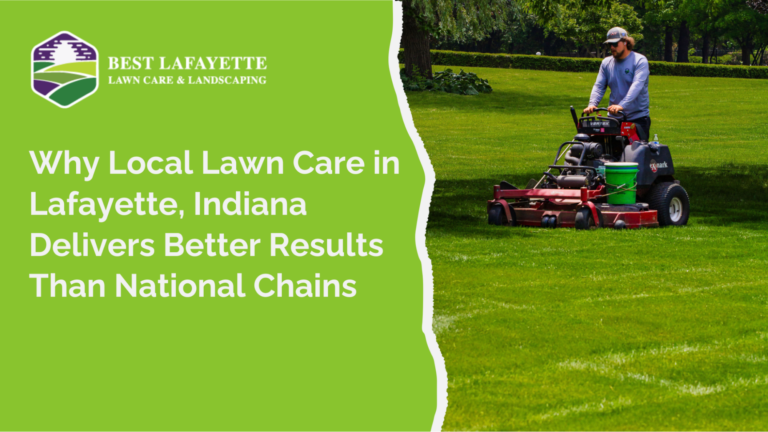
A healthy, well-maintained lawn can improve how people see your home before they ever walk through the front door. Consistent mowing, clean edges, healthy turf, controlled weeds, maintained planting beds, and proper watering create a cared-for appearance that can strengthen curb appeal and make a property more attractive to potential buyers.
For homeowners researching lawn care Lafayette, Indiana services, the value goes beyond having greener grass. Good lawn care helps protect turf from avoidable stress, keeps outdoor areas usable, prevents small maintenance issues from becoming larger ones, and creates a cleaner setting for the house itself.
There is also evidence that curb appeal matters in real estate. In the National Association of REALTORS® 2023 Remodeling Impact Report, 97% of REALTORS® said curb appeal is important when attracting a buyer, while 98% said it is important to potential buyers. The same report estimated a 217% cost recovery for its defined standard lawn care project and 104% for landscape maintenance. These figures are national survey estimates, not guaranteed returns for an individual Lafayette property.
The practical takeaway is simple. Lawn care cannot guarantee a higher selling price, but a neat, healthy landscape can improve first impressions, reduce visible neglect, and help your home present itself more favorably.
What Does Lawn Care Have to Do With Property Value?
Property value depends on many factors, including location, home size, condition, recent comparable sales, market demand, and major improvements. A lawn is only one part of that picture.
However, landscaping influences how people experience the property.
A buyer approaching two similar homes may react differently if one has thin grass, overgrown edges, weeds, and neglected beds while the other looks clean and consistently maintained.
The second property may appear better cared for overall.
The National Association of REALTORS® defines curb appeal as how a property appears to potential buyers from the street. NAR notes that landscaping can affect a visitor’s first impression and may be one of the exterior improvements agents recommend before selling.
That makes lawn care valuable in two ways:
- It improves the physical condition of the landscape.
- It improves how people perceive the property.
Neither automatically changes an appraisal. Both can help a home make a stronger impression.
How Does a Healthy Lawn Improve Curb Appeal?
A healthy lawn creates a visual base for almost everything else in the front yard.
When grass is reasonably dense and evenly maintained, sidewalks look cleaner, planting beds appear more defined, and the house becomes the visual focus.
Strong curb appeal usually comes from several small details working together:
- Consistent mowing
- Clean trimming around obstacles
- Defined driveway and sidewalk edges
- Fewer visible weeds
- Healthy turf density
- Neat planting beds
- Properly trimmed shrubs
- Clean entrances and walkways
- Appropriate irrigation
- Prompt removal of leaves and debris
You do not need a perfect lawn.
In fact, chasing an unnaturally perfect appearance can lead homeowners to overwater or apply products that are not needed. The goal should be healthy, appropriate turf that suits the property and local growing conditions.
Homeowners who want routine help can use residential lawn care services to maintain these basics consistently.
Why Does Consistent Mowing Matter?
Mowing seems cosmetic, but mowing habits also affect turf health.
Purdue Extension recommends a season-long mowing height of roughly 2.5 to 3.5 inches for many Indiana lawns, with about 3 inches serving as a useful average target. The exact height depends on the turf species. Purdue also recommends sharp mower blades because they create a cleaner cut and put less stress on the grass.
Poor mowing habits can make a lawn look less attractive even when it receives plenty of water and fertilizer.
Common problems include:
- Cutting grass too short
- Waiting too long between mowing
- Using dull blades
- Leaving uneven edges
- Mowing stressed turf too aggressively
- Allowing clumps of grass to remain on visible areas
Regular lawn care maintenance can help keep mowing frequency and presentation more consistent during active growth.
How Can Thick Turf Make a Property Look Better?
Dense turf creates a cleaner, more uniform appearance.
Thin turf exposes soil and makes weeds, bare spots, pet damage, and worn paths easier to notice. Those issues can draw attention away from an otherwise attractive home.
The solution is not always more fertilizer.
Thin grass may result from:
Possible problem | What you may notice |
Soil compaction | Thin grass in high-traffic areas |
Poor irrigation | Repeated dry sections |
Heavy shade | Weak grass under trees |
Improper mowing | Scalped or stressed turf |
Poor establishment | Bare or uneven areas |
Seasonal stress | Summer browning or thinning |
Drainage issues | Standing water or soft soil |
A turf assessment can help identify the likely cause before money is spent on treatments.
For thin or stressed lawns, a professional turf care program may include recommendations based on turf condition rather than appearance alone.
When Can Aeration Improve Lawn Appearance?
Compacted soil can affect both appearance and turf performance.
Foot traffic, outdoor activities, equipment, and naturally dense soil can reduce pore space in the soil. Water may have more difficulty soaking in, while roots may struggle to develop.
Purdue Extension explains that core aeration can help relieve soil compaction, improve air and water movement into the soil, and encourage rooting. Purdue generally recommends aerating cool-season turf while it is actively growing, with spring and early fall offering useful windows depending on conditions.
Aeration may be worth considering when:
- Water runs off instead of soaking in
- Turf is thin along common walking paths
- Soil feels unusually hard
- Grass struggles despite basic care
- Heavy use repeatedly damages the same areas
Aeration is not necessary for every lawn every year. The decision should reflect actual compaction and turf conditions.
Why Does Weed Control Affect Curb Appeal?
A few weeds rarely ruin a lawn. Widespread weed growth can make turf look uneven and poorly maintained.
The important question is why weeds are becoming established.
Sometimes the real issue is weak turf. Thin grass leaves open soil where weeds can grow. Improving mowing, turf density, watering, and soil conditions may be just as important as controlling existing weeds.
Purdue notes that fall is generally a useful time for controlling many lawn weeds in Indiana. It also advises homeowners to follow herbicide labels carefully when using lawn products.
Professional weed or fertilizer applications should also follow Indiana requirements. The Office of Indiana State Chemist licenses businesses that apply certain pesticides or fertilizers for hire and sets certification requirements for applicable services.
When hiring a provider, ask which applications are planned and why they are appropriate for your lawn.
How Does Irrigation Affect Curb Appeal?
Which Lawn Improvements May Matter Most Before Selling?
If you plan to sell, focus first on visible maintenance problems rather than expensive upgrades.
NAR’s outdoor remodeling research found that REALTORS® commonly recommend basic curb appeal improvements. Its 2023 survey estimated that standard lawn care and landscape maintenance performed strongly in cost recovery compared with several larger outdoor projects. Again, these are national estimates rather than promises about a specific sale.
A practical pre-listing priority list might look like this:
Priority | Why buyers notice it |
Mow consistently | Creates an immediate cared-for appearance |
Edge walks and driveway | Adds clean visual lines |
Remove weeds | Reduces visible neglect |
Repair obvious bare spots | Makes turf look more complete |
Trim overgrown shrubs | Keeps the house and windows visible |
Refresh beds | Creates a cleaner landscape frame |
Remove dead plants | Prevents neglected appearance |
Check irrigation | Helps avoid obvious dry areas |
Clean walkways | Improves the route to the entrance |
Large landscape renovations should be evaluated more carefully.
If you are considering significant changes before listing, speak with a local real estate professional about what buyers in your price range and neighborhood actually value.
Can Landscaping Improve Value Without Selling the Home?
Yes, because property value is not the only type of value.
Homeowners also benefit from usability, appearance, easier maintenance, and enjoyment.
NAR’s 2023 research found that 68% of surveyed owners had a greater desire to be at home after completing an exterior project, and 60% reported greater enjoyment of their home.
A well-planned yard can also make outdoor spaces more functional.
For example:
- A healthy lawn creates usable space for children or pets.
- Defined beds can simplify mowing.
- Better drainage can reduce muddy areas.
- Proper irrigation can reduce repetitive hand watering.
- Thoughtful plants can improve seasonal color.
- Clear walkways can make the yard easier to navigate.
If the property needs more than routine lawn work, professional landscape design and installation can help organize turf, beds, plants, and usable outdoor areas into a more cohesive plan.
What Lawn Care Problems Can Hurt Curb Appeal?
Some problems stand out quickly from the street.
Overgrown grass
Irregular mowing makes the property look less maintained.
Scalped turf
Cutting grass too low can expose stems and soil while placing added stress on the plants.
Uneven edges
Grass growing across sidewalks and curbs reduces the clean lines that make a landscape look finished.
Bare areas
Open soil draws the eye and can make a lawn look damaged even if most of the turf is healthy.
Overgrown shrubs
Large shrubs can hide windows, signs, pathways, and architectural details.
Broken irrigation
Sprinklers that flood pavement or miss turf can create both appearance and efficiency problems.
Excessive leaves and debris
Seasonal debris can hide healthy turf and make entrances look neglected.
The best improvement plan starts with the most visible problems and works from there.
How Should Lafayette Homeowners Prioritize Lawn Improvements?
Avoid trying to correct everything at once.
Use this order:
- Fix basic maintenance first. Mow, trim, edge, remove debris, and control obvious overgrowth.
- Identify turf problems. Determine why areas are thin, brown, or weedy.
- Check soil and water. Look for compaction, poor drainage, and irrigation problems.
- Repair weak turf at the right time. Purdue identifies approximately August 15 through September 15 as the general optimum seeding period for Indiana cool-season turf.
- Improve beds and shrubs. Clean edges, remove dead growth, and choose plants suited to the site.
- Consider larger design changes last. Make sure expensive additions fit your long-term goals or local buyer expectations.
This approach directs money toward problems that affect both appearance and lawn health.
How Do You Choose a Lawn Care Company?
A good lawn care provider should explain what your property needs without promising unrealistic results.
Before hiring, ask:
- What services are included?
- How often will the property be serviced?
- How are mowing heights adjusted?
- How does the company handle weather delays?
- Are pesticide or fertilizer services properly licensed when required?
- Is the business insured?
- Who should you contact if a lawn problem appears?
- Does the company inspect irrigation or turf issues before recommending treatments?
Indiana homeowners can verify applicable pesticide and fertilizer licensing requirements through the Office of Indiana State Chemist.
Reliable providers should also be comfortable saying when a service is unnecessary.
Frequently Asked Questions
Does lawn care increase home value?
Lawn care can improve curb appeal and buyer perception, but it does not guarantee a specific increase in appraisal or sale price. NAR research shows that real estate professionals place high importance on curb appeal and often recommend lawn and landscape maintenance before listing.
How much value can landscaping add to a home?
There is no dependable percentage that applies to every property. Value depends on location, market conditions, the quality of the work, the property’s starting condition, and buyer preferences. NAR publishes cost recovery estimates for specific projects, but homeowners should not treat them as guaranteed returns.
Does a nice lawn help sell a house?
It can help the property make a stronger first impression. NAR reports that 97% of surveyed REALTORS® consider curb appeal important for attracting buyers. A healthy lawn works best as part of an overall clean, maintained exterior.
What adds the most curb appeal to a yard?
Start with visible basics: healthy turf, regular mowing, clean edges, trimmed shrubs, weed-free beds, tidy walkways, and an uncluttered entrance. Major renovations are not always necessary.
When is the best time to improve a lawn in Indiana?
It depends on the improvement. Purdue identifies late summer through early fall as the preferred period for establishing many cool-season grasses, with roughly August 15 to September 15 serving as a general seeding window.
Is professional lawn care worth it?
It can be worthwhile when you lack time, equipment, consistency, or experience diagnosing turf problems. DIY care may still be practical for homeowners who enjoy the work and can maintain their lawn correctly. Compare the service scope and qualifications before deciding.
Conclusion
Lawn care supports property value most effectively by improving the condition and presentation of the landscape. Healthy turf, consistent mowing, clean edges, appropriate watering, controlled weeds, and maintained planting beds create a stronger first impression and can help a property appear well cared for.
The evidence supports taking curb appeal seriously, but homeowners should avoid claims that a particular lawn service will automatically increase a home’s price by a fixed amount. Real estate value depends on many factors.
Focus first on lawn health, visible maintenance, and improvements suited to your property. If you are preparing to sell, ask a local real estate professional which outdoor improvements matter most to buyers in your neighborhood. If you want reliable year-round lawn and landscape care tailored to local conditions, Best Lafayette Lawn Care can help you evaluate the needs of your property and build a practical maintenance plan.