
bestlafayettelawncare
October 22, 2026
What Are the Best Low-Maintenance Landscaping Ideas for Tippecanoe County Homes?
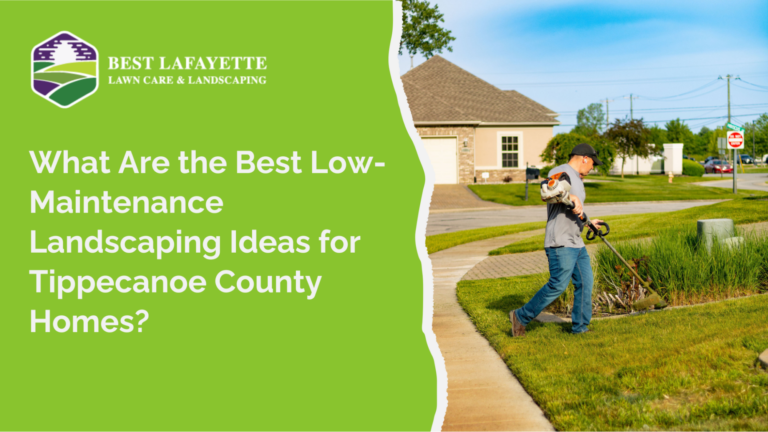
A beautiful yard should be a place to relax, not another full-time job. For homeowners in Tippecanoe County, the best low-maintenance landscaping ideas include native plants, hardy shrubs, mulch beds, smaller lawn areas, and simple garden layouts.
These choices can reduce mowing, watering, pruning, and seasonal cleanup once the landscape is established.
Indiana weather makes smart planning important. Hot summers, cold winters, heavy rain, and changing soil conditions can all affect how well plants grow.
Whether you own a small yard in West Lafayette or a larger property near Battle Ground, your landscape should match your space, soil, and available time.
Homeowners researching landscaping options in Tippecanoe County should focus on plants that suit local conditions rather than choosing designs based only on appearance.
A low-maintenance landscape does not mean a yard with no upkeep. It means choosing plants and materials that need less care over time.
For example, replacing a narrow grass strip with a mulched garden bed can remove an awkward mowing task. Adding hardy perennial plants may also reduce the need for seasonal replanting.
The goal is simple: create a yard that looks good without demanding constant attention.
This guide covers practical ideas, plant choices, design mistakes, and seasonal care tips for homes throughout Lafayette, West Lafayette, Dayton, Shadeland, and nearby communities.
What Makes Landscaping Low Maintenance in Indiana?
Low-maintenance landscaping uses plants, materials, and layouts that reduce routine yard work.
Instead of filling every open space with grass or flowers, the design places each feature where it works best.
A well-planned landscape often includes:
- Plants suited to local weather
- Shrubs that need limited pruning
- Mulch to help control weeds
- Simple garden bed shapes
- Ground covers for difficult areas
- Clear borders between grass and beds
- Efficient watering methods
- Enough room for plants to grow
Good drainage also matters. A plant that enjoys dry soil may struggle in a low spot that holds water after rain.
Purdue Extension recommends choosing plants based on their light, moisture, and soil needs. This approach can improve plant health and reduce avoidable care.
Learn more about thoughtful layouts in this guide to landscape design and installation.
What Are the Best Low-Maintenance Landscaping Ideas for Tippecanoe County?
The right combination depends on your yard, but several ideas work well for many central Indiana homes.
1. Choose Native Plants That Suit Indiana Weather
Native plants are among the most useful choices for a low-maintenance landscape.
These plants grow naturally in Indiana and can support local wildlife. Many tolerate the region’s changing seasons once established.
Popular options worth considering include:
- Purple coneflower
- Black-eyed Susan
- Wild bergamot
- Little bluestem
- Prairie dropseed
- Butterfly milkweed
These plants can bring color, texture, and seasonal interest without the need for annual replanting.
Purdue Extension lists many Indiana-native plants that provide food and habitat for bees, butterflies, and other pollinators.
However, native plants are not maintenance-free.
New plants still need water, weed control, and proper soil conditions. Some species spread or grow tall, making them better suited to larger beds.
Practical tip: Group plants with similar light and water needs. This makes the garden easier to manage.
2. Replace High-Maintenance Grass With Mulch Beds
A large lawn can require regular mowing, edging, watering, and weed control.
You do not need to remove all your grass to reduce this work.
Start with spots that are hard to maintain, such as:
- Narrow strips beside fences
- Areas beneath mature trees
- Corners around buildings
- Spaces near air conditioning units
- Steep or awkward lawn edges
Replacing these areas with planted mulch beds can make mowing easier.
Organic mulch also helps retain soil moisture and limit weed growth.
For most planted beds, a layer of roughly 2 to 3 inches works well. Keep mulch away from tree trunks and plant stems to avoid excess moisture around the base.
Mulch breaks down over time, so check its depth before adding more.
3. Plant Hardy Perennials Instead of Annual Flowers
Annual flowers can provide bright color, but most need replacement each growing season.
Perennials return year after year when planted in suitable conditions.
That makes them a practical option for homeowners who want less seasonal planting.
Consider:
Perennial | Best Growing Conditions | Main Benefit |
Purple coneflower | Full sun, well-drained soil | Summer flowers and pollinator value |
Black-eyed Susan | Full sun to light shade | Bright color and easy seasonal care |
Wild geranium | Partial shade, suitable moisture | Spring blooms for shaded beds |
Wild bergamot | Full sun to partial shade | Fragrant flowers and pollinator support |
Butterfly milkweed | Full sun, well-drained soil | Supports butterflies |
Little bluestem | Full sun, well-drained soil | Texture and fall color |
Plant needs can vary by species and location. Check mature size and drainage requirements before buying.
A simple design with three or four compatible perennial types often looks cleaner than a crowded mix of many plants.
4. Use Easy-Care Shrubs for Structure
Shrubs help a yard look complete even when flowers are not blooming.
They can frame a front entrance, soften building corners, or define outdoor spaces.
For Indiana homes, consider suitable varieties of ninebark, shrubby St. John’s wort, or other locally adapted shrubs.
Look for shrubs that:
- Fit the space at maturity
- Tolerate the available sunlight
- Match the soil moisture
- Need limited shaping
- Handle local winter conditions
Avoid planting large shrubs directly beneath windows or too close to sidewalks.
A shrub that outgrows its space may require constant trimming.
The easiest shrub to maintain is often one that naturally stays within its planting area.
How Can You Reduce Lawn Mowing Without Losing Curb Appeal?
A lawn still serves an important purpose. It gives children and pets room to play and creates open space around the home.
The key is keeping grass where it provides value.
Consider reducing lawn space around trees, along property edges, and in areas where grass grows poorly.
For example, a homeowner might replace an uneven strip of lawn along a fence with one wide planting bed.
That change can reduce difficult mowing turns and create a more finished appearance.
Curved or straight bed edges can both work. Choose a shape that allows easy mower access.
A smaller, healthy lawn often looks better than a larger lawn filled with thin or bare patches.
For the grass you keep, a consistent lawn maintenance routine can help preserve its appearance.
Are Rock Gardens and Gravel Beds Good Low-Maintenance Options?
Rock and gravel can reduce mowing and provide lasting ground coverage.
They work well in selected locations, including:
- Decorative borders
- Dry areas near walkways
- Utility spaces
- Some drainage features
- Areas where plants need little water
However, rock beds are not automatically easier to maintain.
Leaves, soil, and weeds can collect between stones. Dark rock may also absorb heat and make nearby plants hotter during summer.
Rock can be difficult to remove if you change the design later.
For planting beds with trees and shrubs, organic mulch is often a better choice because it helps moderate soil temperature and adds organic matter as it breaks down.
Use gravel where it serves a clear purpose rather than covering every open space with stone.
What Are the Best Landscaping Ideas for Shaded Yards?
Many Tippecanoe County homes have mature trees that create shaded areas.
Grass often struggles beneath dense tree cover because of limited sunlight and competition for water and nutrients.
Instead of reseeding the same bare patch each spring, consider shade-tolerant plants.
Useful options may include:
- Pennsylvania sedge
- Wild ginger
- Wild geranium
- Christmas fern
- Virginia bluebells
Check each plant’s soil moisture needs before planting.
For example, some shade plants prefer moist woodland soil, while others can handle drier conditions.
Avoid piling extra soil over established tree roots. Dig carefully and use small plants where roots make planting difficult.
Leave enough open space around trunks and exposed roots.
A shaded garden can create a calm, natural look while reducing the need to maintain grass in difficult conditions.
How Can You Design a Low-Maintenance Front Yard?
Your front yard shapes the first impression of your home.
Fortunately, an attractive front yard does not need a complex design.
Start with a few strong features:
Use a Simple Foundation Planting
Choose shrubs and perennials that fit naturally around the home.
Leave room for their mature width and height.
Create Defined Garden Bed Edges
Clean edges separate grass from planting areas and make routine care easier.
Repeat Plants for a Consistent Look
Planting the same shrub or perennial in small groups creates a more organized appearance.
Keep Walkways Clear
Do not place plants where they will block sidewalks, steps, windows, or doors.
Add Seasonal Interest
Use a mix of foliage, flowers, and grasses that look appealing across different seasons.
A simple front yard with healthy plants, clean borders, and maintained mulch can create strong curb appeal.
What Can You Do With a Sloped or Wet Yard?
Some yards have slopes, compacted soil, or areas where water collects after rain.
These problems should shape the landscape plan.
For sloped areas, suitable ground covers and deep-rooted plants may help protect soil from erosion.
For areas that receive runoff, a rain garden may be worth considering.
A rain garden is a shallow planted area that holds stormwater for a short time and allows it to soak into the soil.
Purdue’s Rainscaping Education Program explains that typical residential rain gardens may cover about 100 to 300 square feet, with designs based on soil conditions and runoff volume.
A properly designed rain garden should drain within about 24 to 48 hours.
That means it should not remain a permanent pool of water.
Rain gardens still require early watering, weeding, and occasional cleanup.
They also need careful placement away from foundations, utilities, and unsuitable drainage areas.
For persistent standing water near a home, have a qualified professional evaluate the drainage problem before installing plants.
Which Landscaping Option Requires the Least Maintenance?
No single landscaping material works best everywhere.
Compare the main choices before making changes.
Landscaping Option | Routine Maintenance | Best Use |
Traditional grass lawn | Moderate to high | Play areas and open spaces |
Native perennial beds | Low to moderate after establishment | Borders and pollinator gardens |
Organic mulch beds | Low to moderate | Around shrubs and garden plants |
Gravel or rock beds | Low to moderate | Decorative and dry utility areas |
Hardy shrubs | Low to moderate | Entrances and foundation beds |
Shade ground covers | Low to moderate | Areas with limited sunlight |
Rain gardens | Moderate during establishment | Suitable runoff collection areas |
Maintenance depends on plant growth, weeds, weather, and how the area is used.
A landscape may need more attention during its first one or two growing seasons. Once roots are established and plants fill the space, routine care may become easier.
How Much Does Low-Maintenance Landscaping Cost?
Costs depend on property size, plant choices, materials, drainage needs, and labor.
A small mulch bed may cost much less than a full landscape redesign with new walkways, irrigation changes, and large shrubs.
Consider both installation costs and long-term upkeep.
A lower-cost plant that grows too large may create repeated pruning expenses.
A slightly more expensive shrub that fits the space may be easier to maintain.
Before starting, ask for a written estimate that explains:
- Site preparation
- Plant sizes and quantities
- Mulch or stone materials
- Soil improvements
- Installation labor
- Watering requirements
- Cleanup and future care
Avoid choosing materials based on price alone.
When Is the Best Time to Install Landscaping in Indiana?
Spring and fall are often suitable planting seasons in Indiana.
Spring gives plants time to develop roots before winter, but new plants may need extra watering during summer heat.
Fall can offer cooler air and less heat stress for many trees, shrubs, and perennials.
However, plants still need time to establish before the ground freezes.
Avoid planting into frozen, waterlogged, or extremely dry soil.
A landscape maintenance plan can help keep new beds healthy after installation.
What Common Landscaping Mistakes Should Homeowners Avoid?
Even low-maintenance designs can become difficult to manage when plants or materials are poorly chosen.
Common mistakes include:
- Planting sun-loving flowers in deep shade
- Placing large shrubs too close to buildings
- Using thick mulch against tree trunks
- Ignoring poor drainage
- Planting too many different species
- Choosing invasive ornamental plants
- Installing plants without planning for watering
- Making beds difficult to mow around
Some popular landscape plants can spread into natural areas.
Purdue Extension warns about invasive species such as Callery pear and winged burning bush.
Check plant names before buying and choose suitable alternatives when needed.
How Can You Keep Your Landscape Easy to Maintain Year-Round?
A low-maintenance yard still needs seasonal attention.
Use this simple schedule.
Season | Main Tasks |
Spring | Remove winter debris, check mulch, inspect plants |
Summer | Water new plants, remove weeds, check plant health |
Fall | Remove excess leaves, divide plants when needed, prepare beds |
Winter | Avoid heavy traffic on frozen beds, check for snow damage |
Inspect the landscape regularly rather than waiting for small problems to grow.
Early weed removal, for example, usually takes less time than clearing an overgrown bed.
The same applies to drainage, dead branches, and damaged edging.
Frequently Asked Questions
What is the easiest landscaping to maintain in Indiana?
A mix of hardy shrubs, native perennials, mulch beds, and a smaller lawn is often easier to maintain. Choose plants based on sunlight, soil moisture, and mature size. New plants still need regular care until established.
Are native plants better for low-maintenance landscaping?
Native plants can be excellent choices because many suit Indiana’s climate and support local wildlife. However, they are not always drought-tolerant or maintenance-free. Match each plant to the conditions in your yard.
What can I put in my yard instead of grass?
You can replace selected grass areas with mulch beds, native plants, shade ground covers, shrubs, or gravel. The best choice depends on sunlight, drainage, foot traffic, and how you use the space.
How do I make my front yard look nice without much work?
Use a simple design with clean borders, a few well-spaced shrubs, perennial flowers, and fresh mulch. Repeating plant types creates a neat appearance and helps reduce complicated upkeep.
Is mulch or rock better for low-maintenance landscaping?
Organic mulch is often better around trees and shrubs because it helps retain moisture and improves soil as it breaks down. Rock lasts longer but can trap leaves, collect weeds, and increase heat around plants.
Do low-maintenance landscapes still need watering?
Yes, especially during establishment. Even drought-tolerant plants need adequate water while developing roots. Once established, suitable plants may need less irrigation, but extended dry weather can still make watering necessary.
Final Thoughts
The best low-maintenance landscaping ideas for Tippecanoe County homes begin with smart plant choices and simple design.
Native perennials, hardy shrubs, mulch beds, smaller lawns, and well-planned drainage can help reduce routine yard work. The goal is not to eliminate maintenance but to make it more manageable.
Start with one difficult area, assess the soil and sunlight, and choose plants suited to the space. Make changes in stages so the landscape stays functional throughout the process.
For homeowners who want help planning or maintaining a landscape in Lafayette, West Lafayette, Battle Ground, and nearby communities, Best Lafayette Lawn Care offers local landscaping and lawn maintenance services designed around each property’s needs.